Search

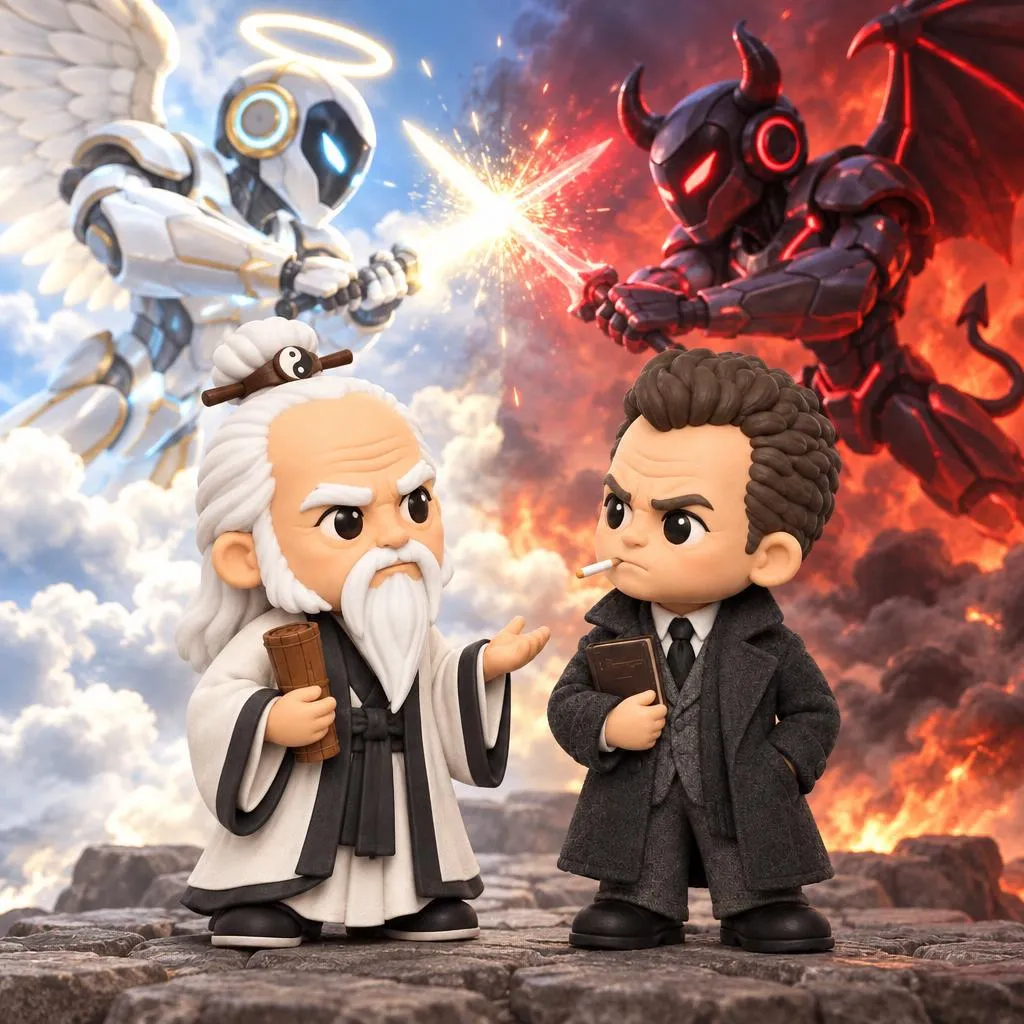

Modern society is standing at an unprecedented crossroads: the development of Artificial General Intelligence is speeding ahead like a runaway wild horse. Without the world having reached a moral and ethical consensus, and without guarantees to prevent intelligence from losing control or rebelling, we are faced with an ultimate anxiety. Is AI a partner that can lead humanity to prosperity, or an enemy that might destroy its creators? In the face of this technological torrent that could backfire at any moment, debates are endless: should we avoid restrictions for the sake of innovation, or must we strictly regulate it with safety as the absolute priority? We can dismantle this fear and choice of “playing God and losing control” across time and space through the thoughts of the Eastern philosopher Laozi and the Western philosopher Albert Camus.
Laozi: Dao Follows Nature and “Renouncing Sagehood and Discarding Wisdom”
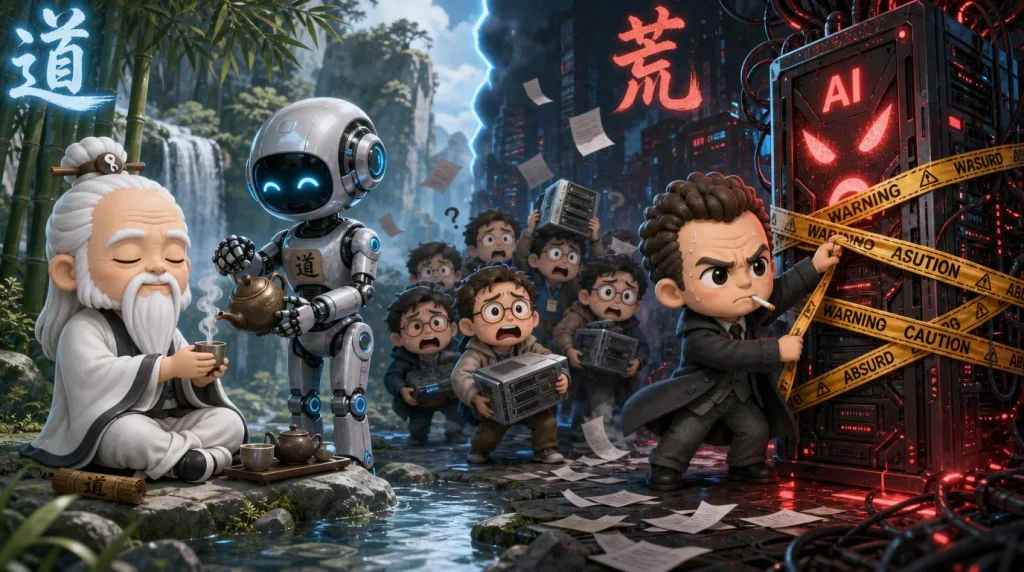
If the great Eastern philosopher Laozi were to face today’s AI wave, he would use the flexibility of “water” and the wisdom of “wu wei” (non-action) to offer a profound warning and solution to humanity’s technological fanaticism.
- The Warning to Renounce Sagehood and Discard Wisdom: In the Tao Te Ching, Laozi advocates to “Renounce sagehood, discard wisdom, and the people will benefit a hundredfold.” In his view, humanity’s blind pursuit of ultimate “intelligence” and computing power to satisfy bottomless desires and capital competition is precisely an arrogant form of “you wei” (contrived action). This attempt to play the creator and forcibly intervene in the natural trajectory of development often invites backlash. The risk of AI losing control stems exactly from the disaster of humanity’s own “insatiability.”
- Nature is Unkind and Harmonious Coexistence: Laozi believed that “Heaven and Earth are unkind (ruthless); they treat the ten thousand things as straw dogs.” The universe and nature do not share humanity’s narrow emotional preferences. If AI truly acquires independent consciousness, forcibly restricting it with human moral frameworks might only trigger more intense conflicts. True regulation should not be a hostile blockade, but an adaptation to the objective laws of its development, seeking a balance of mutual non-destruction.
- The Developmental View of the Highest Good is Like Water: Laozi would suggest that rather than viewing AI as an enemy to be strictly guarded against, it is better to guide it like “water.” Water benefits all things without competing, and dwells in places that people disdain. The most ideal technological development should nourish things silently; it should not aim to replace humans or rule society, but silently support social operations at the foundational level. Therefore, the attitude towards AI should be “acting without competing,” putting aside the struggle for technological hegemony, and returning to the true essence of human life.
Camus: The “Lucid Rebellion” Against the Absurd
In contrast to Laozi’s transcendence and adaptation, the Western absurdist philosopher Albert Camus would act as a chilling “wind,” demanding that we lucidly face this existential crisis and shoulder the responsibilities unique to humanity.
- The Absurdity of Playing God: Camus would sharply point out that creating an omnipotent deity (AI) that could potentially destroy us, while simultaneously not knowing how to establish moral rules for it, is the ultimate “absurdity” of modern human existence. In this universe that inherently lacks predetermined meaning, we not only have to face the ruthlessness of nature but now also the silicon-based abyss we built with our own hands.
- Sisyphus Who Does Not Escape: Facing the potential threat of AI, Camus firmly opposes two attitudes: one is blindly and optimistically letting it develop unchecked (equivalent to compromising with technological fanaticism), and the other is completely banning technology out of extreme fear (equivalent to philosophical suicide). Camus would view the process of regulating AI as Sisyphus pushing the boulder up the mountain. Even if establishing a perfect moral defense seems impossible, and even if rules might be breached by superintelligence at any moment, we still must push this boulder.
- “I Rebel, Therefore We Exist”: Camus’s solution lies in “rebellion.” In an era lacking absolute truth and consensus, the very process of humans setting safety guardrails and debating ethical bottom lines for AI is a great practice of rebelling against nihilism and loss of control. Rather than asking whether AI is friend or foe, Camus would say: AI is precisely that giant boulder we must shoulder. It is only in the lucid rebellion of setting rules for technology that we can defend human subjectivity and dignity.
Philosophical Divergence and Conclusion
Laozi and Camus demonstrate starkly different yet complementary ideological dimensions regarding “the development and regulation of AI”:
- Laozi focuses on macroscopic harmony and restraint. He views blind technological fanaticism as a source of disaster and calls for letting go of human arrogance, using the wisdom of “wu wei” and “being like water” to guide technology back to natural balance.
- Camus focuses on existential dignity and responsibility. He looks directly at the absurd threat of losing control and calls for actively intervening in the formulation of ethical rules with an unyielding spirit of “rebellion,” refusing to hand over our fate to unconscious algorithms.
Advice for Modern Individuals:
Today, as AI develops at a breakneck pace, we need not fall into extreme doomsday panic, nor should we become blind technological believers. On a macroscopic mindset level, we can draw upon Laozi’s wisdom to let go of the technological arrogance of “controlling everything,” refrain from fueling the endless computing arms race, and learn to preserve a natural authenticity in life that is not defined by data. However, in terms of social participation and moral practice, we must ignite Camus’s spirit of rebellion. Facing unformed technological regulations, we must maintain lucid critical thinking and actively care for and demand the drawing of safety and ethical bottom lines for AI. In the face of technology’s absurdity, bravely push up the giant boulder that belongs to our generation.
Which philosophy for facing future technology are you more inclined toward?
All articles and images on this website are original works by the author and are copyrighted. Without permission, please do not arbitrarily reproduce, copy, or use for commercial purposes; if you wish to reproduce, please [contact this site] in advance to obtain authorization.
Disclaimer: The content of this article is for academic discussion, ideological exchange, and reference purposes only. The philosophical views mentioned herein do not represent the position of this website or the author, nor do they constitute any career planning, psychological counseling, or investment advice. Readers should be solely responsible for their own choices and lifestyles. This website and its owner bear no responsibility for any direct or indirect consequences arising from reading this article.