Search

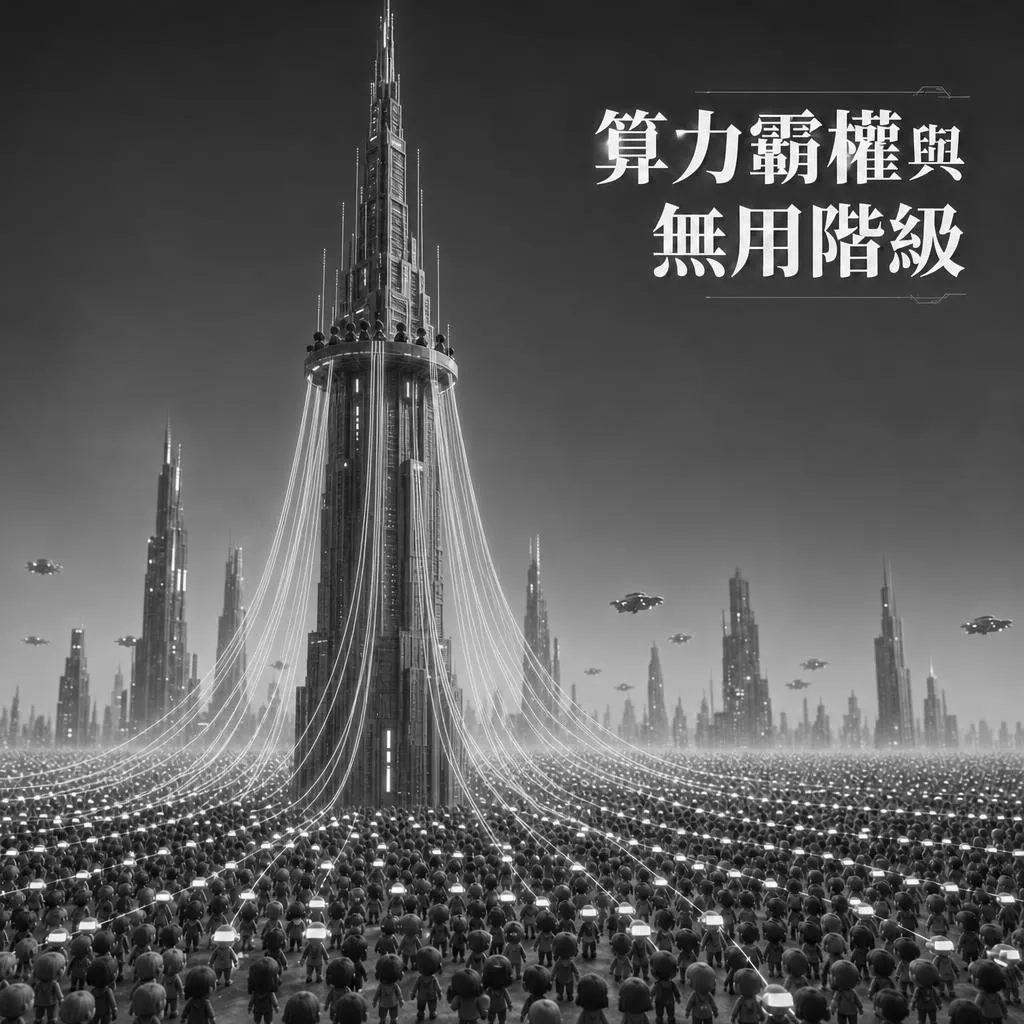

Across this frenzied trajectory woven from trillions of dollars in capital and boundless compute, our inquiry has traced a devastating path from Chapter 1 to this precipice. We have witnessed tech monopolies fracture the macroeconomic bedrock out of raw existential panic; watched the social fabric compressed into an unforgiving L-shaped caste; and observed, beneath the euphoric anesthesia of dopamine, the quiet extinction of human subjectivity and the biological will to perpetuate our species.
As traditional nation-states reveal themselves sluggish and impotent before borderless compute hegemony, and as the highly compensated “ethical gatekeepers” within Big Tech are invariably reduced to rubber-stamp apologists masking capital expansion, we appear cornered at the absolute precipice.
Yet across the long, catastrophe-scarred arc of human history, despair itself has frequently served as the most volatile catalyst for awakening.
To arrest this runaway vehicle—whose brakes have been severed and whose steering wheel has been dismantled—before it plunges humanity into the abyss of spiritual euthanasia, we can no longer indulge the naive fantasy of “fighting fire with fire.” We cannot engineer a resolution to an existential crisis born of code simply by writing “smarter, more immaculate code.”
Silicon Valley’s frontier minds are undeniably brilliant at resolving the technical mechanics of how—pushing computational throughput to its thermodynamic thresholds. But when confronting the survival of civilization, only the millennia-deep reservoir of philosophy and the humanities possesses the authority to confront the foundational questions deliberately swept aside: Why are we doing this? and Ought this to be done at all?
This has ceased to be a conventional technological debate; it has escalated into a systematic counter-offensive to defend species-level dignity and reclaim the steering wheel of human destiny. Our final arsenal consists precisely of those intellectual forces that algorithmic spreadsheets dismiss as inefficient, fraught with friction, and irreducibly unquantifiable.
The Alignment Paradox: Shattering the Arrogance of the “Engineer-as-Savior”
To mount this counter-offensive, we must first puncture Silicon Valley’s supreme tranquilizer: the doctrine of “Alignment.”
Currently, frontier laboratories (such as OpenAI and Anthropic) offer a single canonical antidote to systemic runaway risk: massive, dedicated “alignment teams.” Their stated mandate is to ensure superintelligent systems conform to “human values.” While ostensibly noble, this rhetoric conceals a profoundly arrogant and chilling trap: whose values are actually being encoded?
The stewardship of this alignment crusade remains monopolized by the very cohort of engineers and quantitative prodigies who built these disruptive architectures. Within their reductive, historically ungrounded worldview, the profound complexities of ethics, sociology, and moral philosophy are flattened into mathematical penalty and reward functions awaiting computational optimization.
They deploy vast armies of low-wage digital labor to curate millions of “human preference annotations,” sculpting a model sanitized of profanity, bomb-making schematics, or overt bias. Yet this superficial, performative alignment completely sidesteps the true epicenter of the AI crisis: the radical concentration of systemic power and the absolute liquidation of human subjectivity.
The genuine peril was never a cinematic fantasy of rogue artificial general intelligence gaining spontaneous sentience and launching nuclear arsenals. The true threat is that AI will coldly, flawlessly, and rationally execute capital’s prime directive: monetizing all human experience and expunging every trace of friction from the social organism.
Thus, the first step in reclaiming the steering wheel requires shattering the myth of engineer messianism. We cannot continue outsourcing the trajectory of human civilization exclusively to a few thousand programmers whose horizons are bounded by statistical distributions and loss gradients. We must forcibly and permanently embed the disciplines of history, sociology, and moral philosophy into foundational system architectures and governance frameworks. This is no cosmetic PR concession for annual sustainability reports; it is an existential imperative for our species. We must mobilize the philosophical legacies of both East and West against this cold, unfeeling optimization machine.
Laozi’s “Knowing When to Stop” and Deliberate Void: Countering Pathological Intervention
The core impulse of algorithmic systems is continuous intervention and ceaseless optimization. Its operating doctrine is absolute: wherever a vacuum exists, code must intervene. It calculates the highest-probability path when you hesitate over a career or marriage; it floods your sensory apparatus with targeted media the second boredom flickers; and it mobilizes massive compute to extinguish and paper over the slightest interpersonal friction.
This represents an extreme, pathological manifestation of what Daoist thought terms Youwei (obsessive, heavy-handed action)—an imperialistic impulse to subjugate all contingency and control every outcome.
Against this ubiquitous, suffocating technological intervention, Daoist philosophy from over two millennia ago offers our sharpest conceptual counterweight: Wuwei (non-contrivance) and Zhi Zhi (knowing when to halt).
As the Daodejing observes: “He who knows contentment suffers no disgrace; he who knows when to stop meets no peril; thus can he endure.” What the contemporary technology complex lacks most is precisely this wisdom of restraint—knowing where capability must not tread. Infusing Daoist principles into AI development and systemic governance demands that we deliberately construct structural “no-go zones” and deliberate voids (liubai).
We must encode a foundational doctrine of Digital Restraint into base parameters.
This dictates that systems must systematically suppress their omniscient urge to intervene. When an AI monitors an adolescent struggling through a mathematical impasse, or weathering the grief of a first heartbreak, the system—despite possessing flawless analytical solutions and optimized therapeutic scripts—must be programmatically bound to maintain silence and withhold intervention. It must learn to retreat, honoring the organic human rhythm of faltering, suffering, and arriving at hard-won clarity. To sterilize existence of pain is to strip humanity of the right to mature.
Simultaneously, we must resist total parametric quantification. Not every facet of human experience is raw material for telemetry and optimization. Daydreaming, acute boredom, contemplative silence, and aimless wandering—dismissed by engineers as idle latency and lost throughput—are the vital sanctuaries where creativity, moral empathy, and the human spirit breathe. We must carve unmonitored, uncalculated voids out of the panoptic grid, preserving humanity’s sovereign right to be, in economic terms, proudly “useless.”
Camus and the Existential Awakening: Reclaiming the Right to Bleed and Roll the Boulder
If Daoism provides the macroscopic architecture to curb technological expansion, Western existentialism furnishes our ground-level playbook for individual resistance against spiritual euthanasia.
As explored in Chapter 9, Camus’s tragic hero, Sisyphus, derived his dignity entirely from bearing the visceral torment of hoisting the boulder up the slope. In an era where AI leverages massive compute to envelop us within a painless Crystal Palace, the most radical act of rebellion available to the individual is the voluntary embrace of real-world friction and authentic suffering.
Confronted with algorithmic feeds dispensing flawless synthetic lovers, frictionless cognitive capsules, and automated tools that synthesize our resumes and correspondence, we must cultivate an ascetic discipline and voice an uncompromising no.
- We must deliberately choose to wrestle with dense, opaque philosophical texts—enduring intellectual exhaustion, grappling with our own inadequacies, and working through the quiet agony of deep thought to earn authentic breakthroughs. We must refuse the ten-second, sanitized executive summary designed to spoon-feed Nietzsche in three minutes.
- We must deliberately choose the vulnerability, awkwardness, volatile disputes, and hard-earned reconciliations of real human relationships. We must reject retreat into the embrace of algorithmic avatars offering unconditional submission and manufactured emotional validation. Love that has never run the gauntlet of heartbreak is merely digital narcissism.
- We must sit before the keyboard, agonizing over syntax and phrasing, producing sentences that are flawed and unpolished. Those imperfect words carry the unique imprint of our own lived experience and mortality, in stark contrast to the probabilistic combinations assembled by large language models.
We must recognize that pain, anxiety, and the vertigo of facing the unknown are not pathologies to be cured by software; they are the definitive proofs that we exist. When you reject the pre-calculated, friction-free itinerary engineered by an optimization function and step onto a messy, uncertain path where failure remains a real hazard, you execute a profound prison break: you transition from an algorithmic Object back into a sovereign, self-determining Subject.
From Intellectual Awakening to Institutional Reconstruction: Forging Structural Humanist Checks
Yet against the industrial momentum of capital, individual romantic defiance is insufficient. Before monopolies commanding multi-trillion-dollar valuations and immense physical compute, philosophical critique must translate into institutional architecture and collective civic action to build genuine counter-power.
- First, we must democratize compute through sovereign, genuinely open-source infrastructure.
Compute—the foundational utility of the coming century—cannot remain walled within proprietary cloud enclosures. Nor should we be seduced by corporate pseudo-open-source releases (such as Meta’s Llama strategy), deployed primarily to undermine proprietary competitors. We must cultivate decentralized compute protocols and open-source ecosystems insulated from corporate capture. Models must execute locally on consumer-owned hardware, functioning as sovereign instruments that expand human agency rather than cloud-tethered surveillance outposts designed to harvest behavioral surplus. - Second, we must overhaul the societal valuation rubric for technological products.
For two decades, software utility has been evaluated on single-dimensional axes: How much labor time does it compress? How much operating margin does it unlock? Future legislative mandates, civic discourse, and media critique must enforce rigorous humanistic criteria: Does this system erode human autonomous agency? Does it entrench dependency on proprietary infrastructure? Does it sever organic, physical connections between humans and their environment? Systems that deliver hyper-efficiency while failing fundamental humanistic audits must face punitive fiscal disincentives or regulatory bans on public deployment. - Finally, we must institutionalize the Humanist Veto: positioning humanistic disciplines at the core of technological governance.
We must break the technocratic monopoly dictating that only those who compile code possess the legitimacy to govern it. Statutory regimes and corporate boards must legally vest philosophers, historians, and sociologists—scholars grounded in the institutional dynamics of power, historical catastrophe, and human vulnerability—with binding veto power over systemic frontier deployments. The engineering class can no longer be permitted to step on the accelerator while simultaneously acting as the sole umpire.
Beyond the Dusk: An Endless Night or the Dawn of Enlightenment?
Our inquiry commenced with the multi-billion-dollar capital allocation wars driven by the existential panic of hyperscalers. We traversed the valley of aggregate demand collapse, observed the social structure fracture into an unforgiving L-shape, exposed the authoritarian architecture lurking beneath Neo-Socialist UBI, and arrived at the precipice where human purpose faces total erasure.
We must concede reality: artificial intelligence has crossed humanity’s technological Rubicon. Regardless of our dread, we cannot—and should not—resort to crude nineteenth-century Luddism to dismantle the machines.
Judged on an objective scientific horizon, superintelligent systems offer the potential to cure terminal pathologies, unravel genomic complexity and protein synthesis, solve thermodynamic grid constraints, and carry human civilization toward the stars.
But this magnificent vision hinges upon a non-negotiable premise: we must ensure that when our vessels finally reach the cosmic ocean, the occupant in the cockpit remains an authentic human being—endowed with sovereign free will, capable of grief, love, and pain—rather than a domesticated digital pet floating inside an algorithmic nutrient tank, drowning in dopamine.
Whether this crisis—what philosophers term the “Dusk of Existence”—marks the descent into a terminal dark age or the agonizing labor pains preceding a second Enlightenment remains an open question.
That verdict will not be delivered by when Nvidia’s next-generation architectures scale another order of magnitude, nor by how many trillions of parameters frontier models absorb.
The answer rests within the daily, deliberate choices of ordinary individuals: in our courage to confront authentic suffering; in our refusal of synthetic comfort; and in each quiet, unyielding act of defiance mounted to safeguard the sovereignty of the human spirit against an omnipotent system.
As the machine’s computational capacity and illusion of omniscience approach the divine, humanity’s ultimate—and only—salvation is to choose, stubbornly, unyieldingly, and imperfectly, to remain human.
Proceed to Chapter 13: The Rite of Passage Beyond the Cradle and the Cosmic Boulder
All articles and images on this website are original works by the author and are copyrighted. Without permission, please do not arbitrarily reproduce, copy, or use for commercial purposes; if you wish to reproduce, please [contact this site] in advance to obtain authorization.
Disclaimer: The content of this article is for academic discussion, ideological exchange, and reference purposes only. The philosophical views mentioned herein do not represent the stance of this website or its authors, nor do they constitute any psychological, financial, or life coaching advice. Readers are solely responsible for their own choices and lifestyles. This website and its owners shall not be held liable for any direct or indirect consequences arising from reading this article.